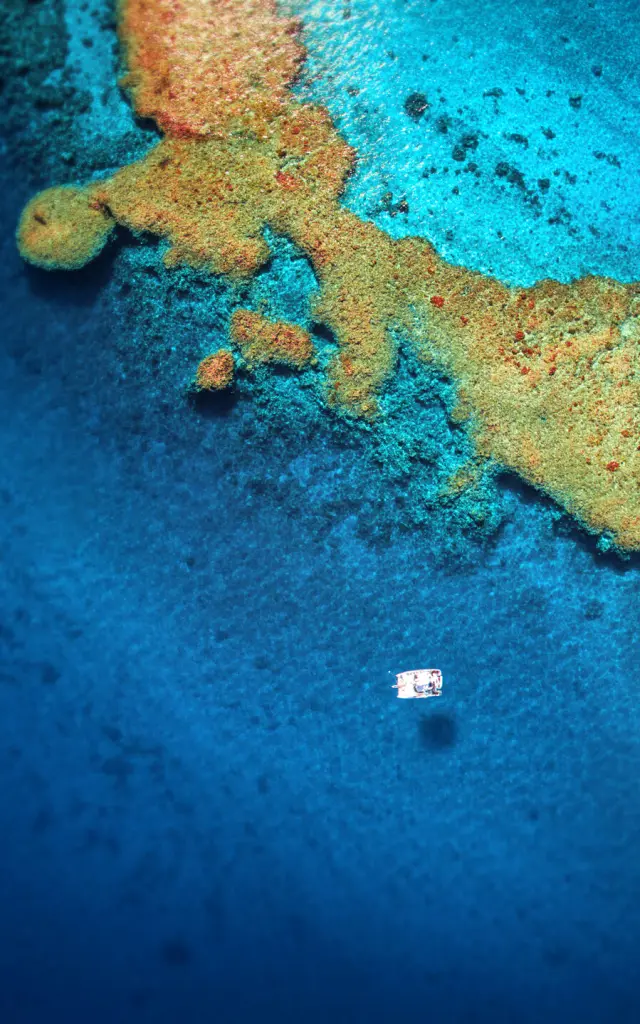
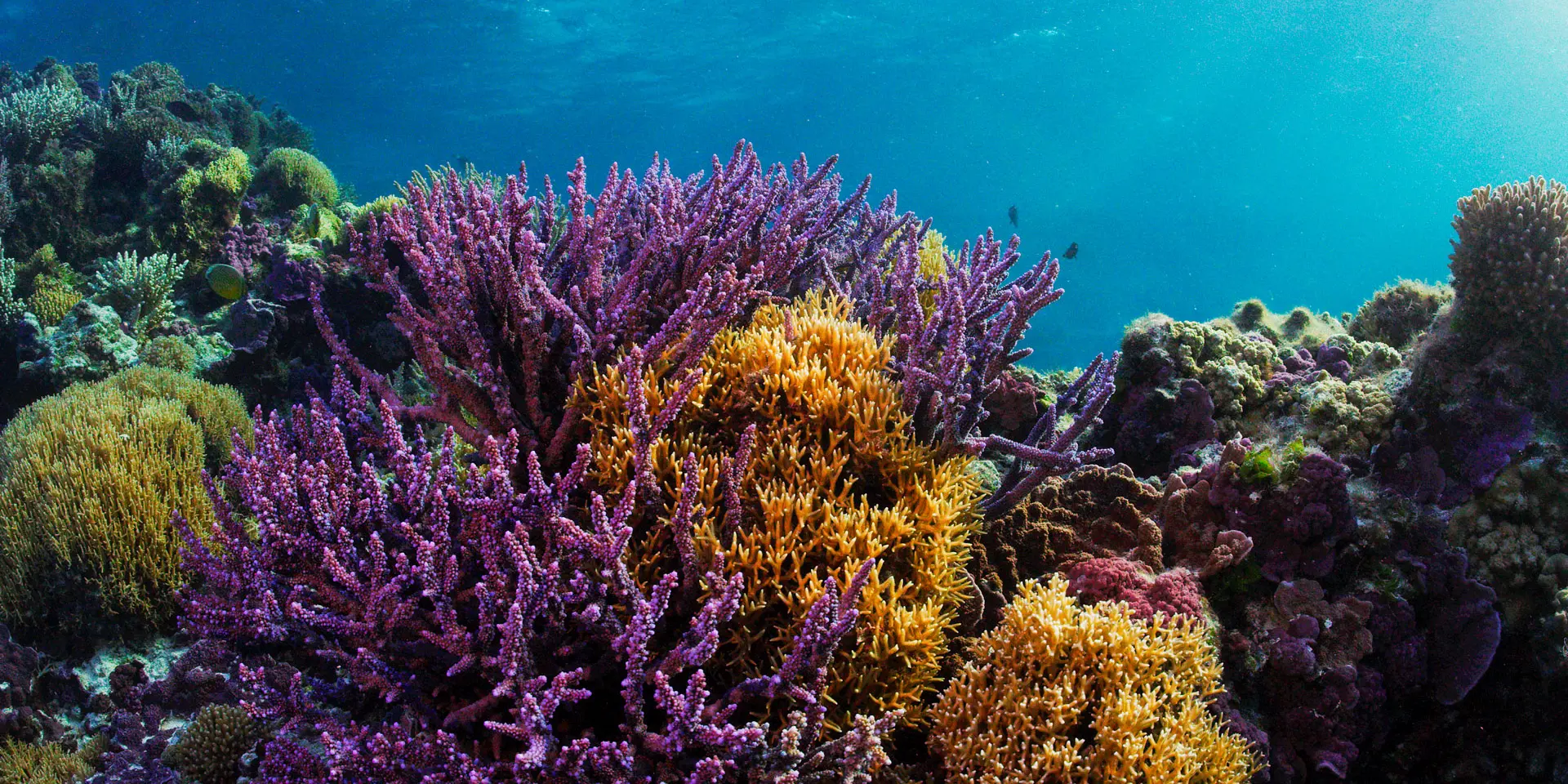
Colorful coral formations in the clear waters of New Caledonia’s lagoon, with purple, yellow and orange corals lit by sunlight.
©

Beneath the surface of New Caledonia’s lagoon, the coral reef reveals a mesmerizing world of color

|

Dean Cropp - Access All Angles

Sustainable boating and protected areas

New Caledonia lies on the migration route of many species: some come here to feed, while others live here year-round. Some of these ecosystems are even considered intact, untouched by human impact, a rare situation in today’s world. The Natural Park of the Coral Sea helps preserve this exceptional ecosystem, which has a high level of endemism. It is therefore important to respect the regulations in force regarding anchorages, protected species and fishing quotas, and to adopt the right behaviour.

Responsible boating

Natural Park of the Coral Sea

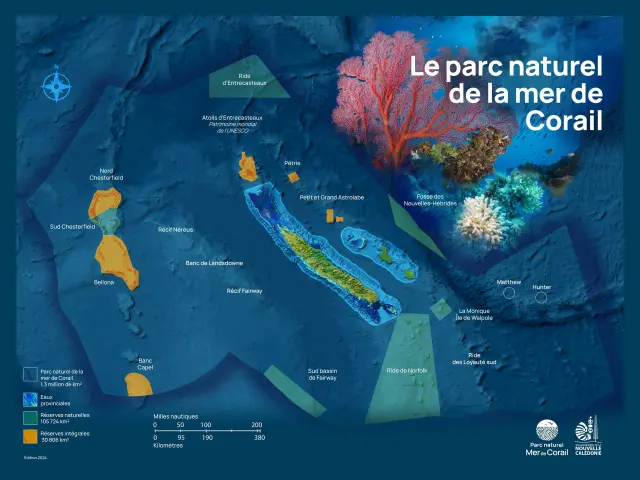
The Natural Park of the Coral Sea is a marine area covering the whole of New Caledonia’s maritime space, or 1.3 million km². This immense ecological corridor, through which species move, helps preserve the integrity of this exceptional marine environment, as well as the culture of Oceanian communities, whose connection to the sea is essential. It is therefore imperative to respect the regulations in force.

View the map of marine protected areas (MPAs) across the park.

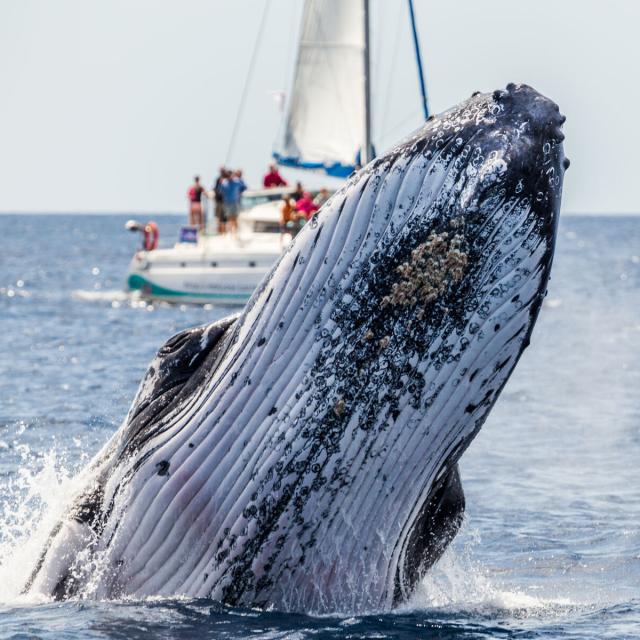
Humpback whales migrate through New Caledonian waters every year, from July to September. The first whales observed near Ouen Island mark the beginning of yam planting, a sacred tuber in Kanak culture. They come from Antarctica to breed, particularly in the southern lagoon, which explains the presence of many charter boats.

The Environmental Code governs whale watching in New Caledonia.

To reduce shark risk, adopt the right behaviour:

  • Do not feed fish.
  • When spearfishing, do not attach fish around your waist.
  • Do not gut your fish or clean your catch at anchor.
  • Always be accompanied when practising a nautical activity (snorkelling, paddleboarding, kitesurfing, etc.).
  • Do not swim after heavy rain, or at river mouths.
  • Do not swim at dawn or dusk.

Protected species all year round

Non-exhaustive list of species that are prohibited from being captured, kept or consumed, under penalty of a fine and/or seizure of the boat:

  • Turtles and eggs.
  • Marine mammals (whales, dugongs).
  • Fish (Napoleon wrasse, humphead parrotfish, sharks).
  • Shellfish (giant triton, volute, helmet shell, nautilus).
  • Sea snakes (banded sea krait).

Certain marine animal species are regulated depending on the season or area: mud crab and mangrove oyster, giant clam, trochus, lobster, sea cucumber, picot, grouper.

Protected areas

  • To protect sea turtles, a white flag is visible on some islets of the Grand Lagon Sud identified as nesting sites. Camping is prohibited.
  • To protect seabirds, the red flag, visible on some islets, indicates that landing on or flying over the islet is prohibited: nesting is in progress.
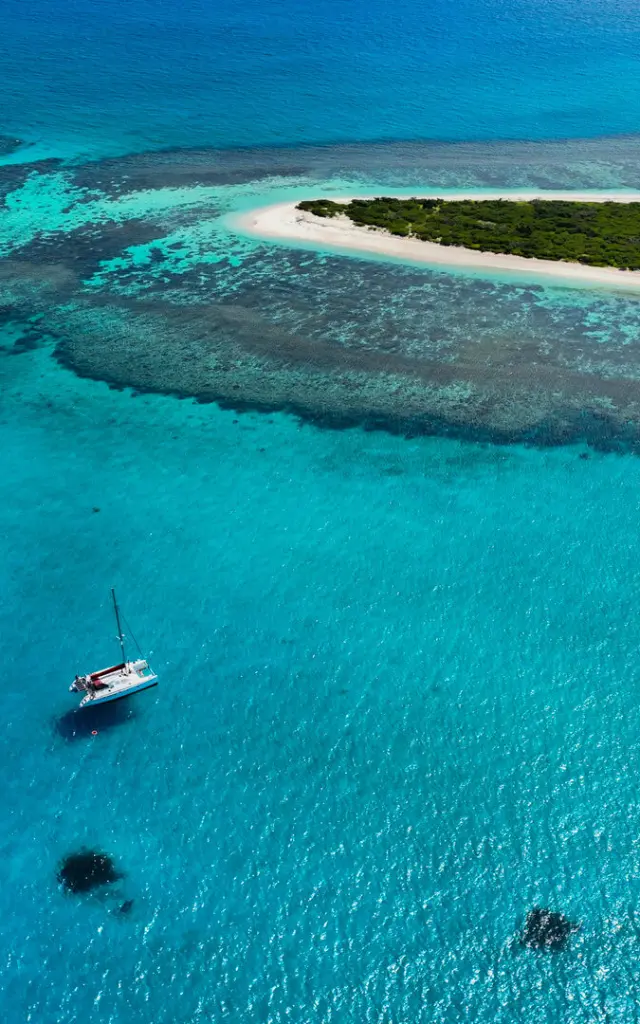
  • To protect the seabed, Province Sud has installed 120 eco-moorings in marine protected areas. Use them as a priority to avoid your anchor damaging the coral and marine environment (except in 20-knot winds for boats over 10 m).
  • Check at a glance the islets open to the public in real time in Province Sud.
  • View the list of parks and natural sites in Province Sud.
  • Yellow markers delimit MPAs in Province Sud and Province Nord.
  • Eco-mooring is paid in Dreulu Bay, in the Loyalty Islands Province: the Lytofishing association maintains them.
  • Connected buoys help prevent free anchoring in Kuto Bay, on the Isle of Pines. They are free and mandatory.

Regulations by province

South Province

The marine protected areas of Province Sud are presented in the Lagoon Guide 2025: MPA map, regulations, use of eco-moorings, emblematic species, fishing calendar, useful numbers, etc.

Fishing regulations: authorised fishing types, fishing periods and quotas.

Environmental Code: full text of the Environmental Code.

The provincial nature ranger is a lookout

The provincial nature ranger works in the field all year round to protect New Caledonia’s environment, on land and at sea, throughout Grande Terre: raising awareness, monitoring and carrying out inspections. A nature ranger may inspect your catch (quotas, species).

North Province

The marine protected areas of Province Nord are presented in the Province Nord Tide Calendar: area map, regulations, emblematic species, fishing calendar, useful numbers, etc.

Environmental regulations: list of species and habitats to protect.

Environmental Code: full text of the Environmental Code.

The provincial nature ranger is a lookout

The provincial nature ranger works in the field all year round to protect New Caledonia’s environment, on land and at sea, throughout Grande Terre: raising awareness, monitoring and carrying out inspections. A nature ranger may inspect your catch (quotas, species).

Loyalty Islands Province

The Environmental Code: full text of the Environmental Code.

Turtles and sharks have the same rights as humans

Since 2024, the Loyalty Islands Province has granted turtles and sharks the same rights as humans, namely the right to be defended by a lawyer.<br><br>

<strong>Art. 110-3:</strong> the unitary principle of life means that humans belong to the natural environment that surrounds them and conceive their identity through the elements of this natural environment. This constitutes the founding principle of Kanak society.<br><br>

In order to take account of this understanding of life and Kanak social organisation, certain elements of nature may be recognised as having legal personality and rights of their own, subject to the legislative and regulatory provisions in force.<br><br>

<strong>Art. 241-2:</strong> animal and plant species, as well as certain natural sites, benefit from a protection regime adapted to their vulnerability and cultural value. As natural entities that are subjects of rights, they are subject to enhanced protection. The rest of the living world benefits from the ordinary protection regime.
Respect, protect

Good practices

Preserve coral

When snorkelling, avoid any contact with coral, whether with your feet or fins. Do not collect any live shellfish in an MPA and do not feed the fish.

Fish according to the rules

Fishing is prohibited in MPAs. Elsewhere, line fishing, spearfishing, harpooning and net fishing are authorised within quota limits. The following are prohibited: night spearfishing or scuba spearfishing, fishing with explosives, a crowbar or poison.

Keep places clean

Dispose of your household waste in the bins provided in marinas, on shipyard hardstands, in town, in bush villages and on the islands. Remember to sort your waste too.

Stay dressed

Nudism is not permitted, whether at anchor, ashore or when showering on deck.

Navigate without illegal chartering

Charter is prohibited on visiting sailing boats.

Preserve the tranquillity of the lagoon

Limit noise disturbance to respect wildlife, natural areas, residents and other lagoon users.