Discover the diving spots
Scuba diving in Noumea
|
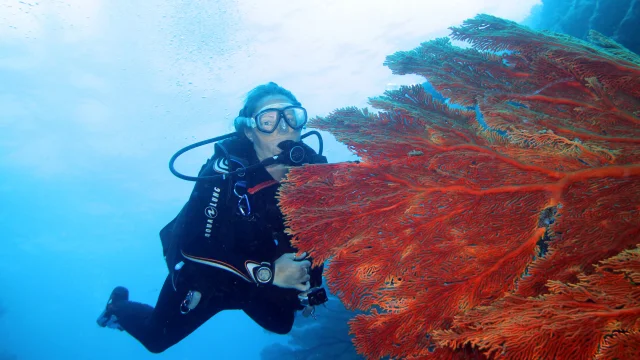
Diving in the lagoon, Isle of Pines
|
Novices and seasoned divers alike will revel in the vibrant marine life thriving amidst magnificent coral formations, hidden within the coral reefs, passages, and drop-offs. Internationally acclaimed as a biodiversity sanctuary, New Caledonia offers the perfect setting for advancing your diving skills. Join us in discovering the must-visit diving sites in New Caledonia.
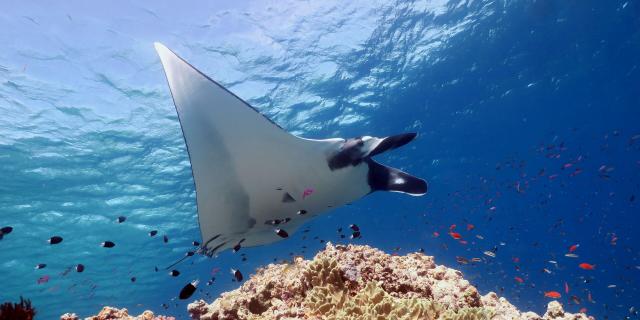
Manta ray, Ouvéa
|
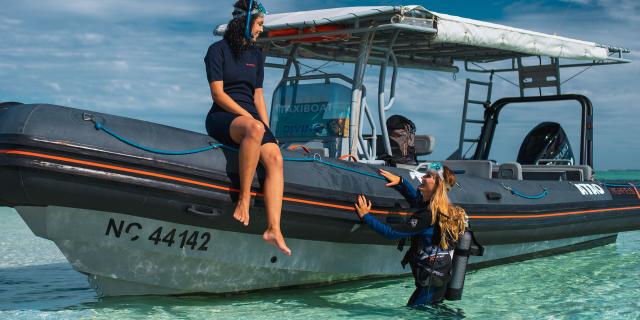
Diving on the island of Noumea
|
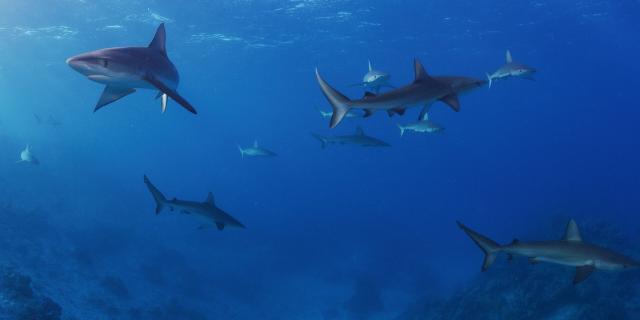
Reef sharks in New Caledonia
|
These sites offer captivating drift dives. Depending on the tides, you can witness a concentration of marine life. Sightings may include sharks, manta rays, dolphins, and dugongs, among others. The Dumbéa site (near Signal islet) is renowned for its school of grey sharks, while the Boulari site (near Amédée islet) offers year-round encounters with manta rays.
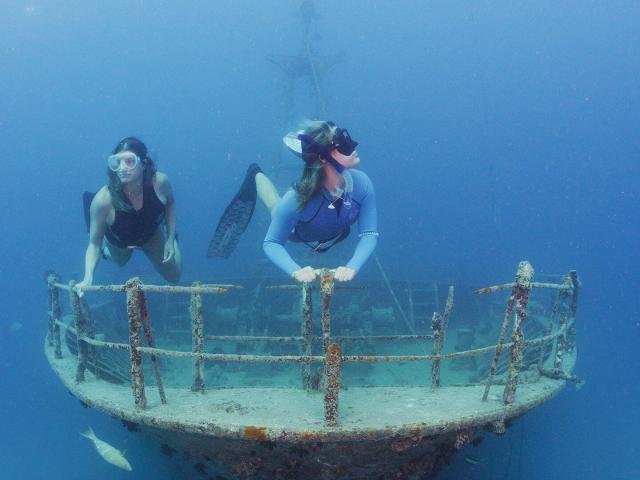
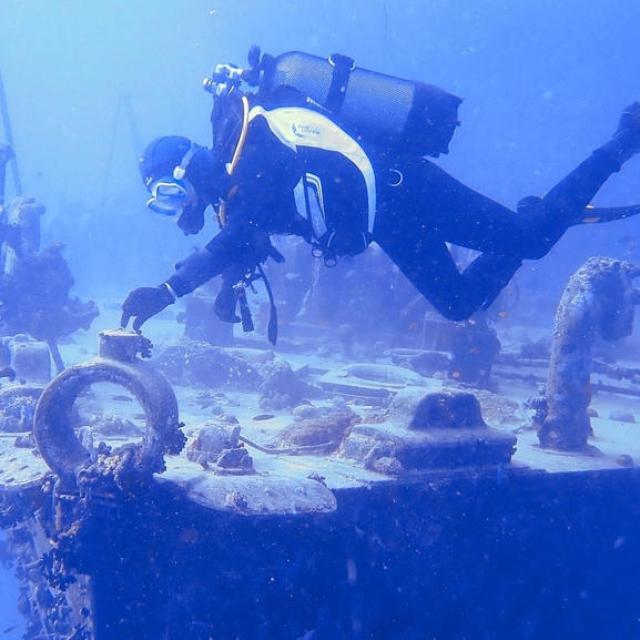
Diving on a wreck in Noumea
|
Located between Boulari Pass and Amédée Islet, this sunken ship is one of New Caledonia’s most famous wrecks. Intentionally sunk in 1988, it rests at a depth of -26 metres and teems with marine life, including merozoans, carangues, perch, and nudibranchs. This rich ecosystem is a diver’s paradise.
Complete your dive with a tour of the Maritime Museum of New Caledonia where the ship’s history is recounted and illustrated!
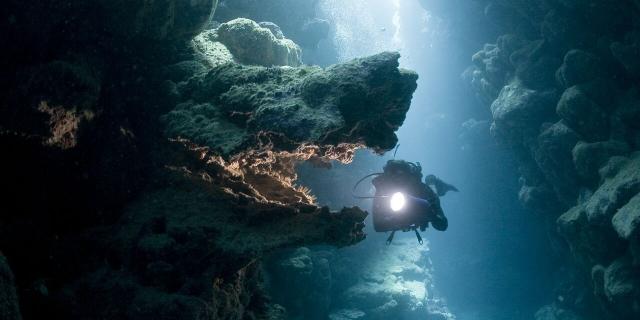
Scuba diving in Hienghène
|
A spectacular and renowned dive site, the Cathedral of Hienghène captivates divers as they navigate through faults and tunnels before emerging onto a drop-off adorned with brightly coloured gorgonia. While known for its relief and small resident fauna, pelagic species such as tuna, king mackerel, and grey sharks are often spotted offshore.
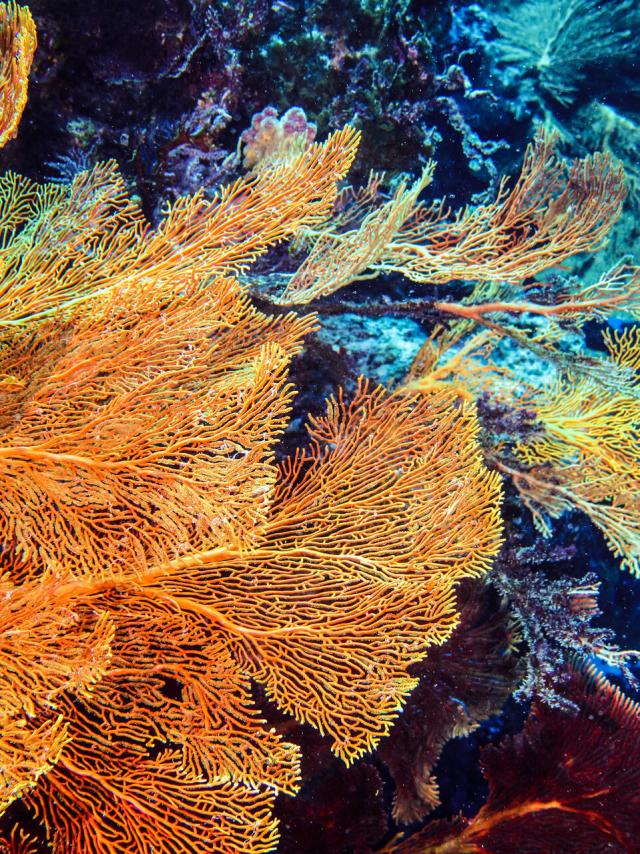
Gorgonian sea fans diving in New Caledonia
|
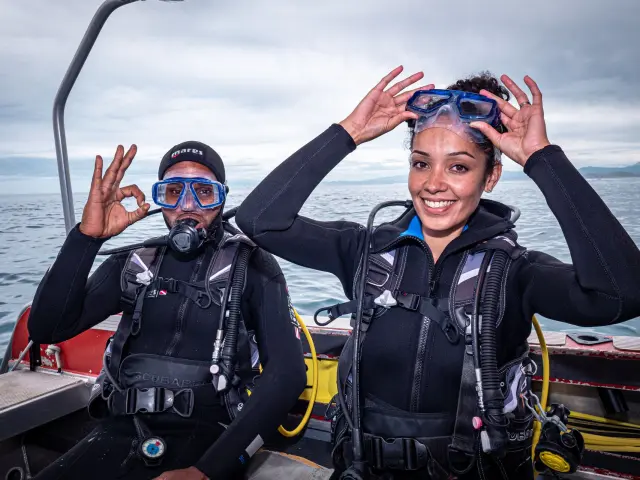
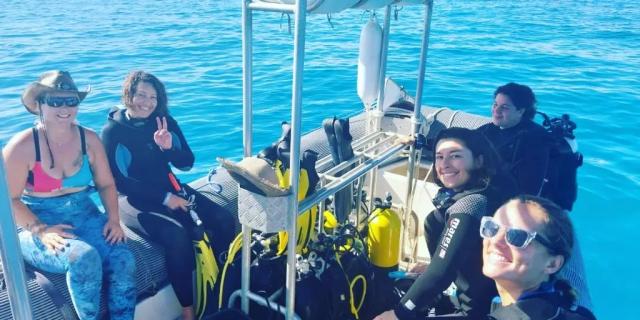
Mask on, smiles ready: in La Foa, the dive starts on the boat.
|
This site boasts one of the largest concentrations of gorgonians in New Caledonia. The diverse underwater terrain, composed of faults, arches, and canyons, showcases small fish, gorgonians, nudibranchs, anemones, and multicoloured soft corals in an enchanting light.
Diving trip to Koumac
|
To the north of Grande Terre, Koumac holds delightful underwater surprises. Divers will need a flashlight to explore the Deverd pass—a true maze of caves and cavities. Keep a keen eye out for pelagic fish.
Located north of the baie de Santal, several coral formations are linked by arches covered in giant gorgonians. This backdrop is ideal for spotting dogtooth tuna, scorpion fish, or even leopard sharks, delighting photographers.
Divers flock to the Isle of Pines for its diverse dive sites. Gorgonian Valley stands out as an exceptional site with gorgonian forests, numerous faults, and abundant marine life. It features a stunning drop-off adorned with pristine corals. The site is renowned for its leopard sharks and pygmy seahorses.
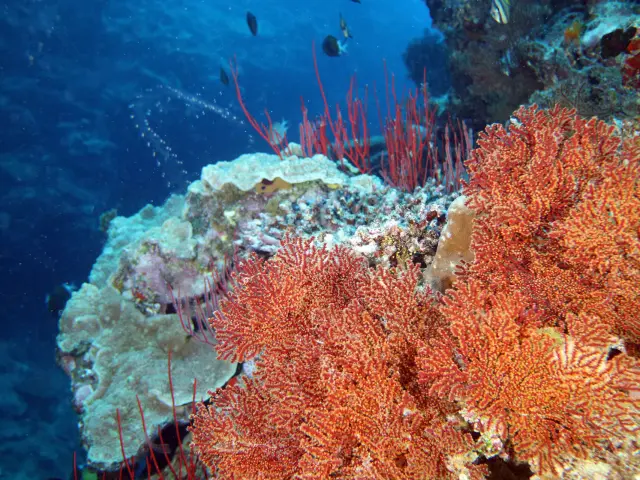
Beneath the surface of Île des Pins, a vibrant coral garden comes to life
|
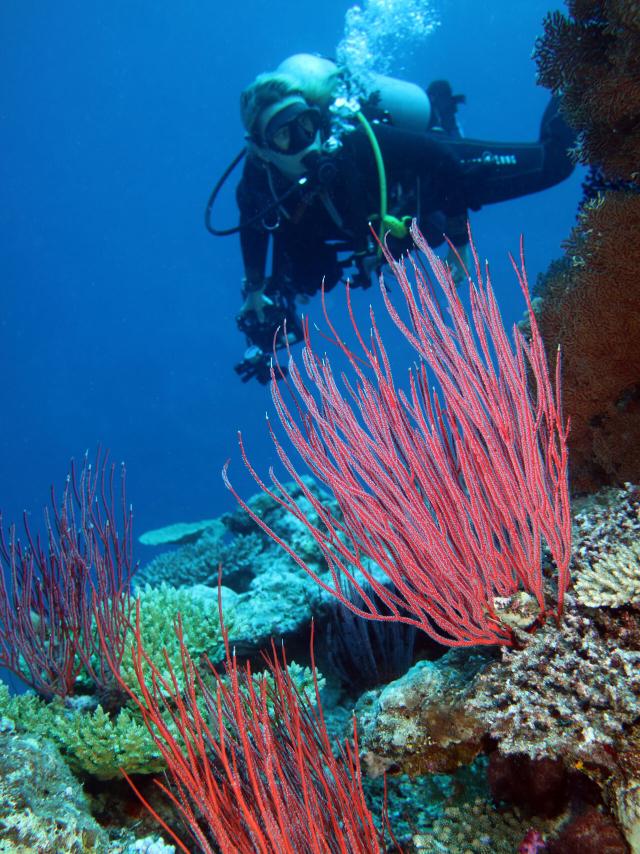
Scuba diving in the Isle of Pines
|

Gadji Bay, Isle of Pines
|
Cave diving enthusiasts cherish this incredible spot on the Isle of Pines. Amidst plays of light and relief, you can observe a wide variety of species up close, including leopard sharks, seahorses, and wild boar fish.
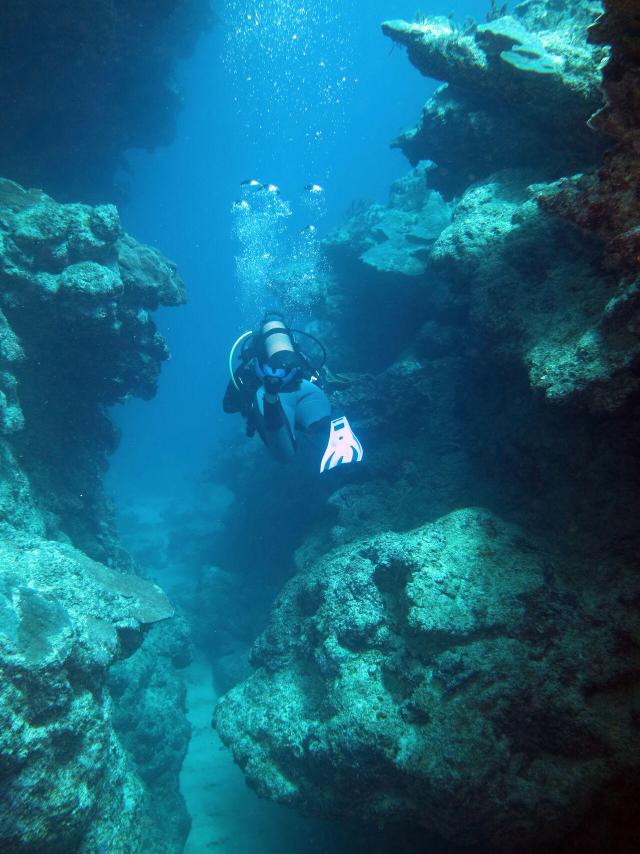
Diving in Bourail
|
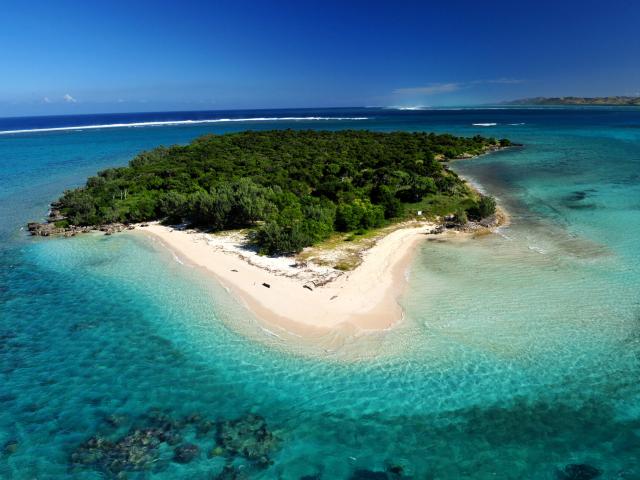
Green Island in Bourail
|
A 20-minute boat ride from Bourail, this dive site outside the lagoon is well-protected from trade winds by the coral reef. The pass offers a fish-rich area in shallow, turquoise waters. Depending on the season, you may encounter white tip sharks, leopard sharks, stingrays, leopard stingrays, schools of jacks, napoleons, turtles, and dugongs. The outer pass features winding canyons and illuminated coral-covered caves. Nearby, you’ll also appreciate the grand coude de Kélé coral reef’s beauty and the pelagic diversity of the ‘faille aux requins’ (Shark Pass) site.
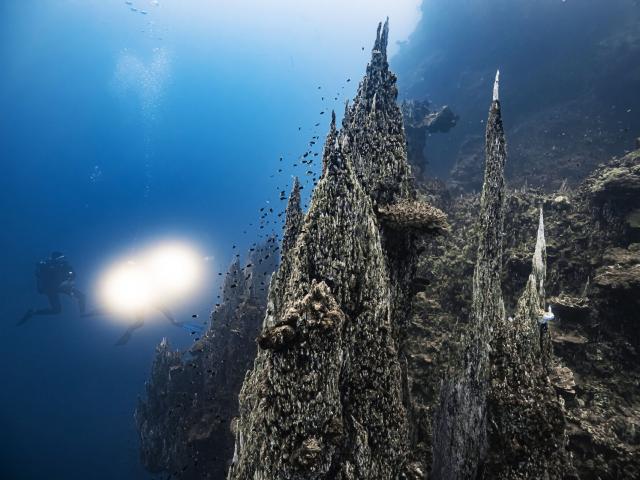
Needle of Prony
|
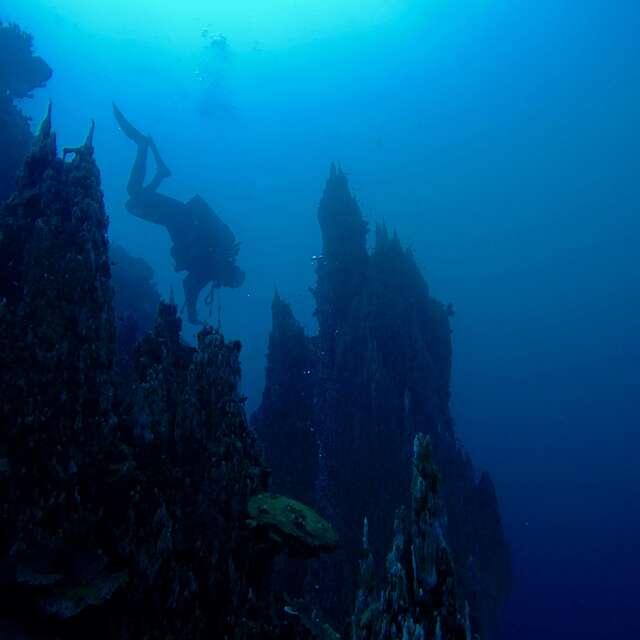
In the Great South, the colossal chimney-like structure is unlike any coral formation. It results from a freshwater resurgence, beginning at a depth of 38 metres and rising to within 2 metres of the water’s surface. This unique structure attracts numerous fish species, including bivalves and loaches.
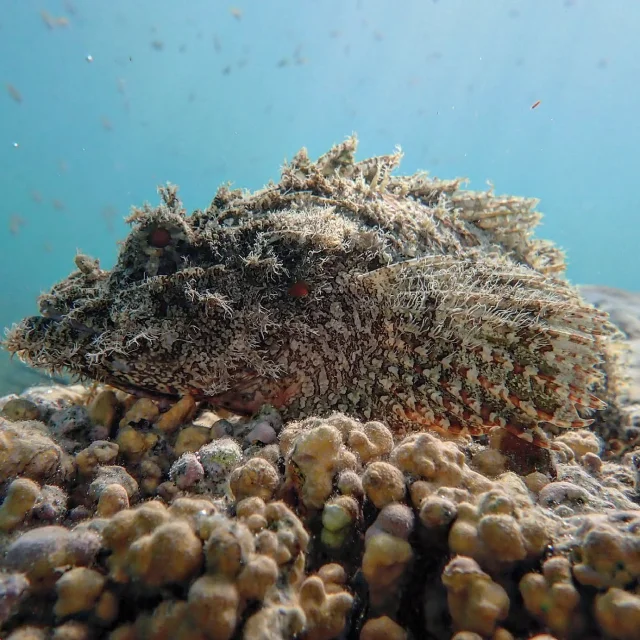
a few seconds ago
#olympus #underwaterphotography #stonefish #nouvellecaledonie
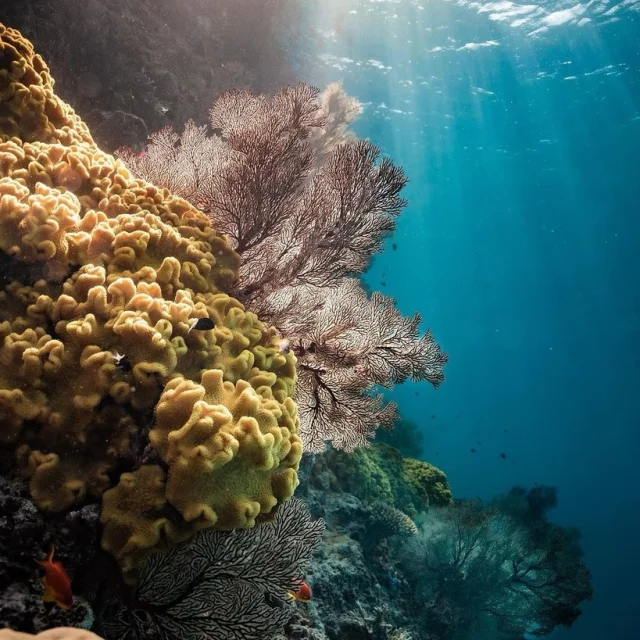
2 years ago
🪸Majestic Sea fans in New Caledonia. Sea fans are a type of soft coral that are often found in warm waters and around reefs. Sea fans are colonial animals that have a beautiful, branching structure that is covered by soft tissue. 📸 po_liinette #kaorimedia #internationalmedia #countrybranding #countrypromotion #nationbranding #newcaledonia #nouvellecaledonie #pacificregion #pacific #melanesia #oceania #southpacific #tourism #snorkeling #diving #lagoon #travel #paradise #flora #biodiversity #pacifictourism #travel #dive #freediverlife #underwater #underwaterphotography #corail #seafans #gorgone #Gorgonacea #Alcyonacea
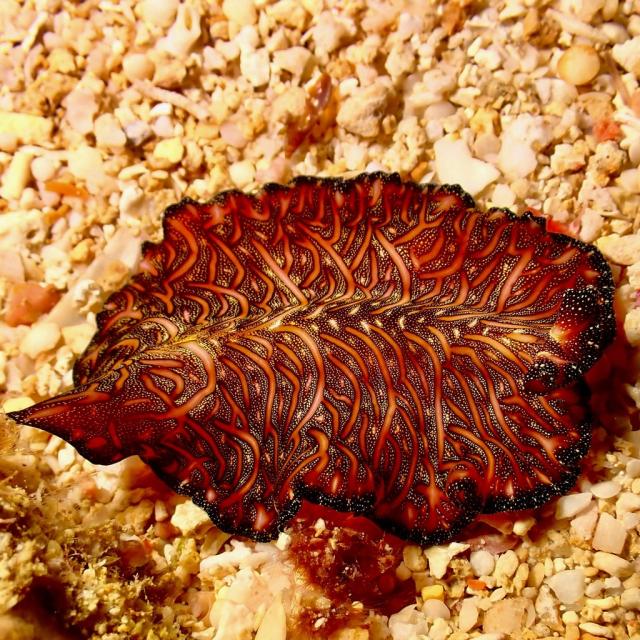
3 years ago
#tietidiving #poindimie #newcaledonia #nouvellecaledonie ##biodiversity #biodiversite #underwater #underwaterphotography #wearessi #ssi_international
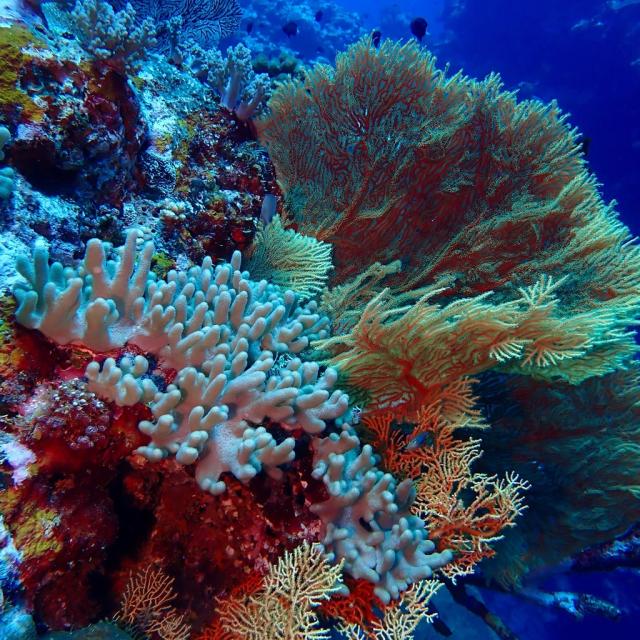
3 years ago
#tietidiving #poindimie #newcaledonia #nouvellecaledonie ##biodiversity #biodiversite #underwater #underwaterphotography #wearessi #ssi_international
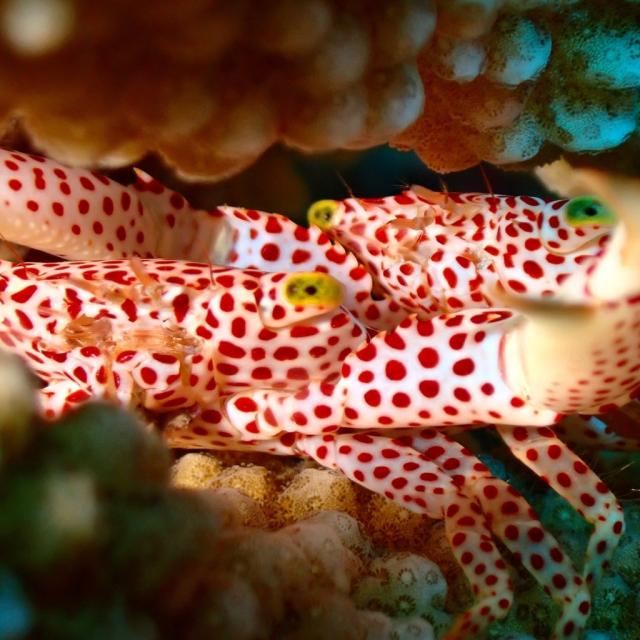
3 years ago
together is better #tietidiving #poindimie #newcaledonia #nouvellecaledonie ##biodiversity #biodiversite #underwater #underwaterphotography #wearessi #ssi_international
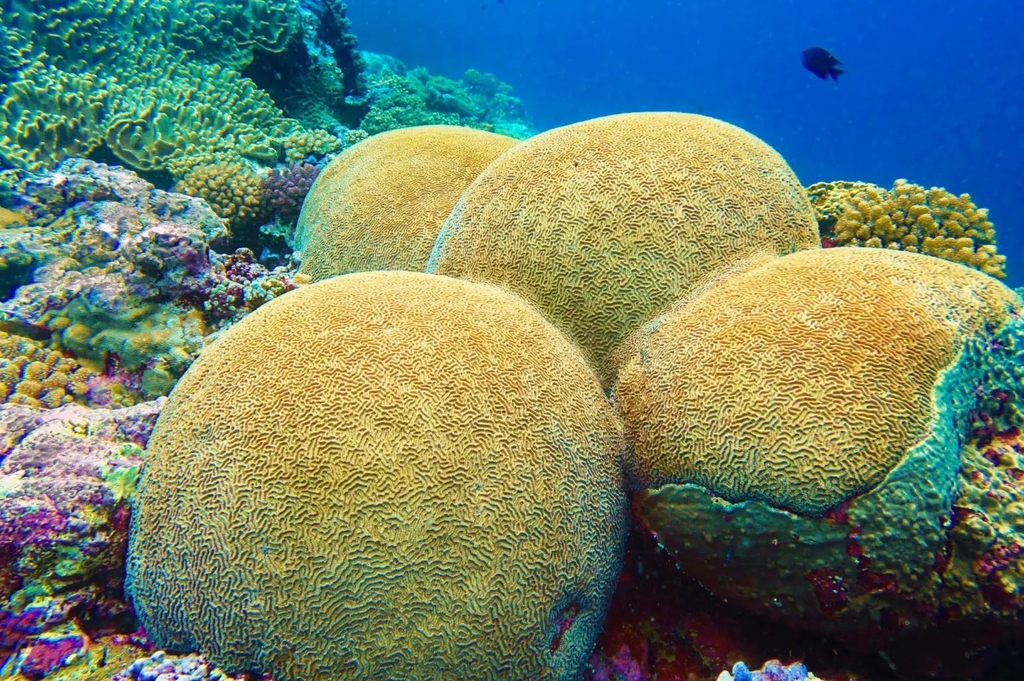
17991217672959857
|
3 years ago
Epave de la Dieppoise
17876456627842303
|
3 years ago
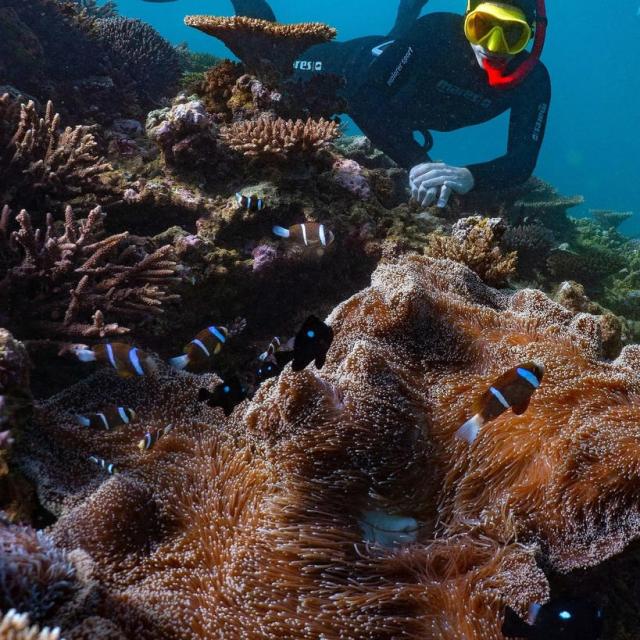
Freediving, récif sortie de la baie de Prony #coral #coralreef #divinglife #plongee#freediving #corail#diver#plongeur#plongeebouteill#plongee#photoplongee #underwaterpictures #underwater #underwaterphotography #pacifique #pacific #newcaledonia #nouvellecaledonie #freedivingart #freedive #freediver#apnée#sport#nature #underwaterphotography#underwater #freediving #turtle #fishphotos #prony
18364596844062536
|