- Is New Caledonia a safe destination?
New Caledonia is a relatively safe tourist destination, with minimal health and safety hazards. Nonetheless, it’s wise to exercise caution.
- Can I travel alone in New Caledonia?
Solo travel in New Caledonia is safe and enjoyable. The welcoming locals and laid-back atmosphere make it an ideal destination for solo adventurers. However, remember to apply good judgement and common sense to ensure your safety, just as you would at home.
- Are facilities adapted for disabled people?
Major hotels in New Caledonia meet international standards, and most restaurants and attractions, including museums, are disability-friendly. Consult your travel agent regarding your specific requirements to plan your trip and make the most of your holiday.
- Do I need travel or health insurance to travel to New Caledonia?
Yes, travel insurance or health coverage (with minimum coverage of 30,000 € – AUD 50,000) is mandatory to cover potential medical repatriation, urgent medical care, and emergency hospital treatment.
If ever you need to call on local health services, rest assured, New Caledonia boasts modern medical facilities comparable to those in developed countries.The Médipôle du Grand Nouméa, with its state-of-the-art equipment – including a vascular imaging chambers, a CT scanner, a radiotherapy centre, a decompression chambers (offering a real guarantee of safety for all scuba divers) and hemodialysis treatments – ensures top-quality healthcare services. In case of medical emergencies, rapid assistance by plane or helicopter is available throughout the territory.
While Greater Nouméa houses hospitals and clinics, the region also has a network of dispensaries (local medical centres) to handle immediate emergencies.
It is, however, advisable to take out travel insurance capable of covering healthcare and possible medical repatriation.
- What medical care is available in New Caledonia?
As a French territory, New Caledonia is equipped with internationally recognised hospitals and advanced medical centres, comparable to those found in developed countries. During your stay, you’ll have access to high-quality medical and surgical care provided by qualified professionals.
In Nouméa, the Médipôle and the Kuindo-Magnin Clinic offer modern facilities such as vascular imaging rooms, CT scanners, radiotherapy units, and dialysis treatment centres.
The Northern Hospital Centre, which includes three sites in Koné, Koumac, and Poindimié, ensures comprehensive medical coverage across the North Province in areas such as general medicine, surgery, and gynaecology-obstetrics. These centres are equipped with appropriate facilities, including imaging and radiology units, analysis laboratories, self-dialysis services, and post-operative care and rehabilitation units.
In addition to hospitals and clinics, the territory also provides:
- A relatively dense network of dispensaries across the archipelago, capable of handling emergency situations
- Emergency air evacuation services by plane or helicopter, covering the entire territory and available at sea for cruise passengers and sailors
- A hyperbaric chamber listed in the global Dive Alert Network and a secondary chamber, both operated by trained medical teams – offering peace of mind and safety for scuba divers
- A private dialysis centre – Médisud 3 – offering tailor-made stay packages in New Caledonia, with a premium service delivered by English-speaking professionals
You can find a full list of health facilities on our Useful Contacts page.
- What should I do in an emergency?
In case of an emergency, follow these steps:
- Secure the accident scene and individuals involved.
- Evaluate the victim’s condition.
- Request assistance from emergency services using the following numbers:
- Medical emergencies – 15
- Sea rescue – 16
- Police – 17
- Fire brigade – 18
Provide the emergency services with the following information:
- The phone number or device you are calling from.
Your name, if necessary. - The nature of the issue (illness or accident).
- Any risks present (fire, explosion, collapse, etc.).
- The exact location of the incident.
- The number of individuals involved.
- The condition of each victim.
- Initial actions taken.
Administer first aid using guidelines available on the Department of Home Affairs website.
- Do I need vaccinations before I leave?
No specific vaccinations are required for entry into New Caledonia. However, staying up to date with routine vaccinations (DTPP, hepatitis B) is advisable. Vaccinations against typhoid and hepatitis A are optional.
- How can I stay safe on the road?
New Caledonia is generally a very safe tourist destination. However, exercising caution is always prudent. Night driving, especially in rural areas outside Greater Nouméa, should be avoided.
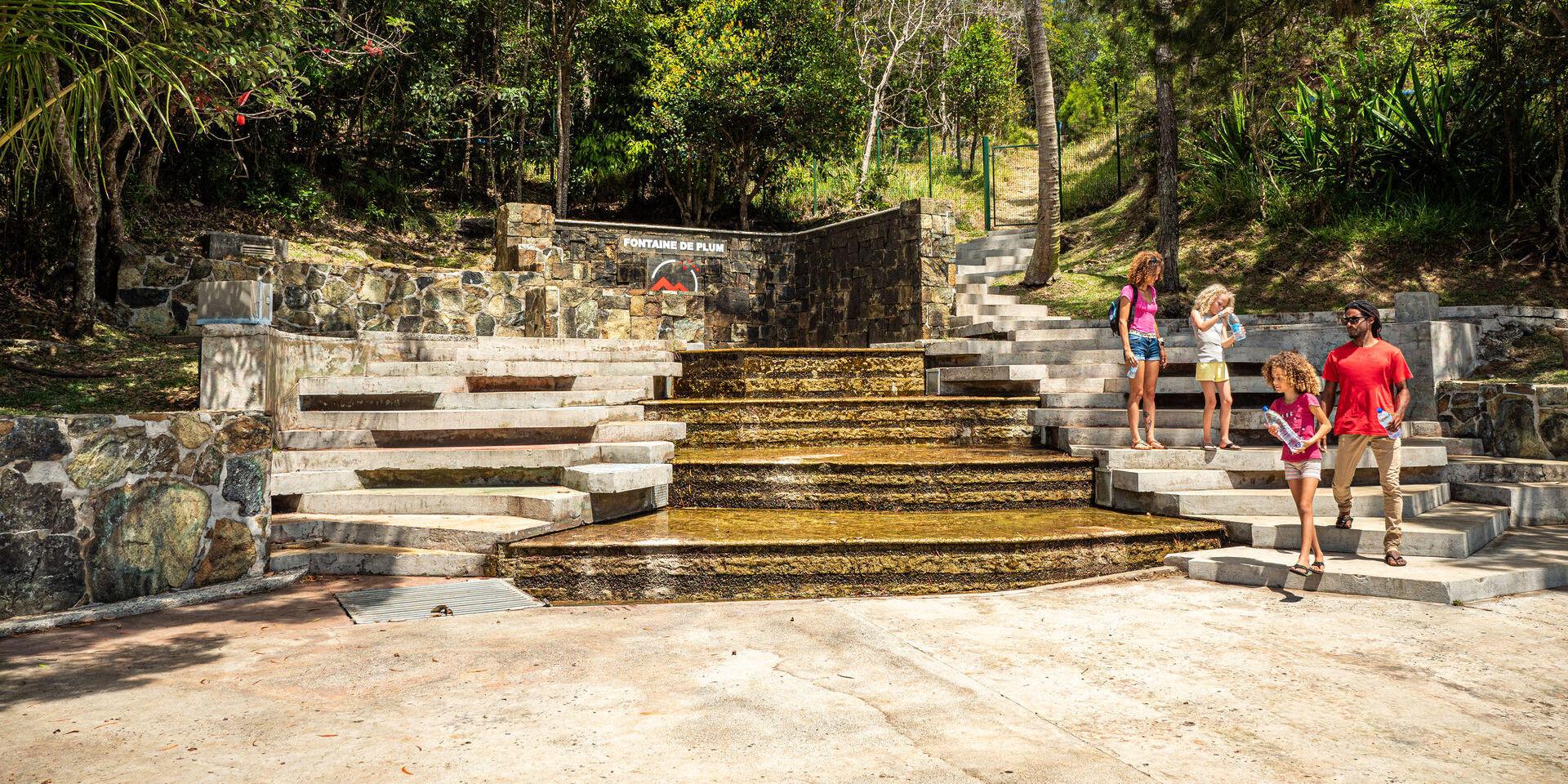
Spring water from Mont-Dore
|
Health & Safety
in New CaledoniaFrequently asked health and safety questions
- Is New Caledonia a safe destination?
- Can I travel alone in New Caledonia?
- Are facilities adapted for disabled people?
- Do I need travel or health insurance to travel to New Caledonia?
- What medical care is available in New Caledonia?
- What should I do in an emergency?
- Do I need vaccinations before I leave?
- How can I stay safe on the road?